
A child at my school got bullied daily, this was in the early 1980s before the internet was born in 1990. It was nothing too physical just name-calling, pushed out of the dinner queue, spitballs of paper cannoned over towards his desk and items of clothing going missing during physical education (P.E). It was relentless though six hours a day, five days a week this happened. He took solace at home, away from the playground, in his bedroom watching films, listening to music, and at the weekend he enjoyed playing out with the neighbourhood kids. He lived quite a distance away from the school, never coming in contact with the bullies, just mixing in his own social circle. Perhaps one of the reasons the bullying took place is that he was deemed to be an outsider.
What is the online equivalent of the school playground?
The last 20 years have seen the invention and rise of social media. Facebook and Twitter were available to the public in 2006 with the invention of Instagram in 2010 bought by the owners of Facebook. Billions of people connect to the social media boom with laptops, mobile phones, tablets, and home computers. Celebrities have used this platform to boost their career profiles along with personal profiles.
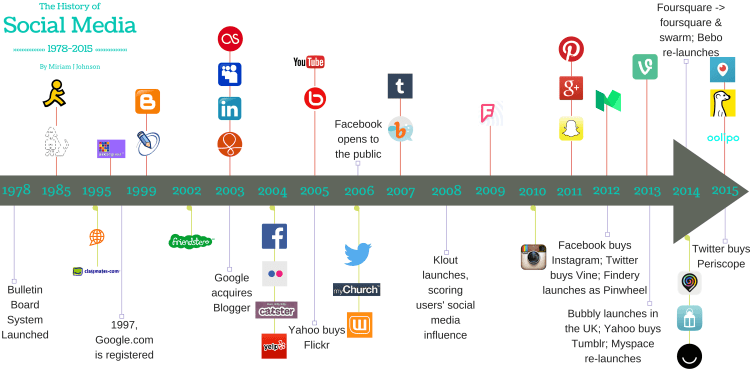
Online bullying from cyberbullying to internet trolling affects everyone, including celebrities. Internet trolling is when individuals leave comments on blogs or online news sites in the comment sections to shift the attention of the authors content to themselves and to disrupt the discussion topic. Cyberbullies tend to target individuals as oppose to general inflammatory statements. Examples could be mean spirited private messages or posting pictures to taunt the celebrity. Cyberbullies do not want attention themselves but to inflict distressing negative attention onto their victim (McDunnigan, 2019).
According to ditchthelabel.org/ cyberbullying has risen drastically over the last ten years, 62% of young people have been sent nasty private messages on a smartphone app-based social network (Hackett, 2019).
Social identity theory is the categorisation of two groups of people, an ‘ingroup’ and an ‘outgroup’ the bullies consider themselves to be the ingroup are usually made up of two or more individuals perceiving themselves to belonging to each other; a bully will rarely be on their own, they will target the ‘outgroup’ perhaps to increase their self-esteem at the expense of the out-group; who is not a member of the ‘ingroup’ whose self-esteem is lowered (Gross, 2015).
What is the solution?
A possible solution to online bullying is to come off social media and not engage with bullies. Bullying should not take place at all, and it could be argued its very cowardly act, whether it is in groups at a school or behind the safety of a computer/mobile phone screen but unfortunately bullies will always exist. Coming off social media might not be an ideal solution, the focus will then shift to another individual, but there is a trend happening…
- 32%, of Facebook’s active monthly users, choose not to log in every day
- 64% of Twitter users are inactive in a given month
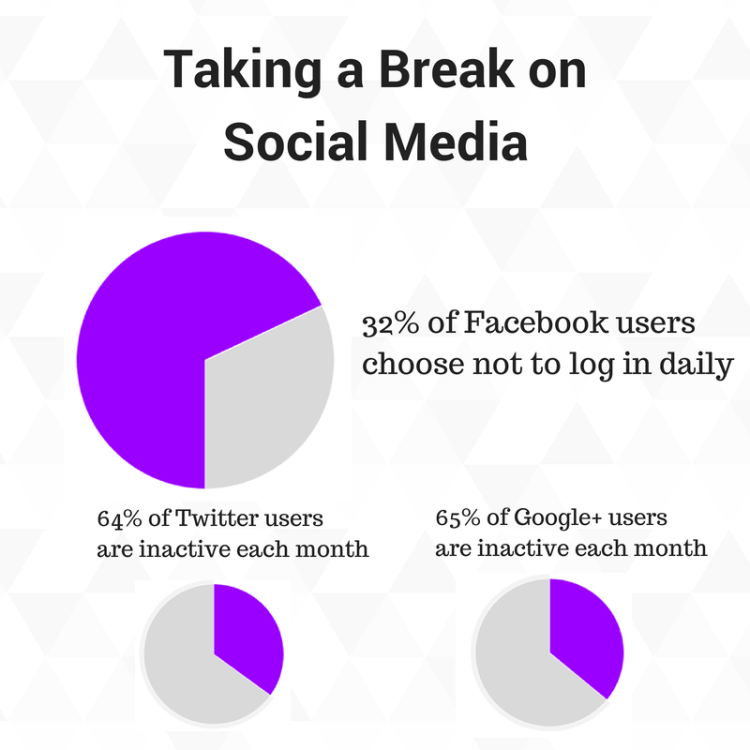
Facebook has 491 million active users take a break each month (Lee, 2016).
Many celebrities have adopted this approach, thus nullifying the opportunity for online abuse, but for this blog, the focus will be on singer-songwriter Ed Sheeran and the actor Bill Murray.
Ed Sheeran was recently named ‘artist of the decade’ (Beaumont-Thomas, 2019), with his albums spending 41 weeks at number one in the charts, his singles have spent 38 weeks at the top of the charts, totalling 79 weeks at number one. In total, his songs have spent 572 weeks in the top 40 over the last decade. He quit using social media in 2015. On his Instagram, he posted about his social media detox “Hello all. I’m taking a break from my phone, emails and all social media for a while,” he wrote to his followers (Hirsh, 2017). His estimated net worth is $160 million (CNW, 2019).
Actor Bill Murray, famous for such films as Ghostbusters and Caddyshack, does not use social media. He famously does not use an agent or a manager; the only way to contact him is to leave a voicemail on a mythical unlisted 1-800 phone number to a landline. He may get back to you he may not. This is how he does his business in the industry (Kohn, 2019). His estimated net worth is $140 million (CNW, 2019).
When does it go wrong?
Jesy Nelson is a singer in the pop group, Little Mix, at 19yrs old she was working in a pub dreaming of winning the TV show ‘The X-Factor’. In 2011 she did just that as part of a girl group. The group went on to become the biggest girl group since the Spice Girls with the aid of social media. Then the abusive messages came “You are the ugliest thing I have ever seen in my life. You do not deserve to be in this girl band; you deserve to die. “She’s a fat ugly rat’; ‘How has she got in this girl group?’; ‘How is the fat one in this?” Consumed by online bullying, Jess soon became depressed, had eating disorders and suicidal thoughts (Hunt, 2019). Jesy was being stereotyped by the online bullies due to her looks and physical appearance compared to the other members of the group. Her downfall was taking the comments personally, maybe she has low self-esteem, perhaps she suffers from ‘imposter syndrome’. Imposter syndrome is a cognitive psychological state in which the person has chronic self-doubt of their own abilities. They may typically think they are lucky, or they are in a false position of success. It is estimated that 70% of people experience imposter syndrome at some point in their lives (Abrams, 2018).
What’s the difference?

The three mentioned artists have lucrative careers. Jesses personal wealth is estimated at £12 million with singing, so why cheapen yourself by continually posting on social media sites provocatively self-promoting photographs of herself, leaving herself open to vile abuse from online trolls. Apart from two pictures on her Instagram page, you would never know she was in a pop group. When vile trolls see a way in they will exploit it, time to take time out from social media and concentrate at doing what you do that has made you successful. Take yourself away from the playground.
What would you do?
References
Abrams, A. (2018, June 20). Yes, Impostor Syndrome Is Real. Here’s How to Deal With It. Retrieved from Time Magazine: https://time.com/5312483/how-to-deal-with-impostor-syndrome/
Beaumont-Thomas, B. (2019, December 11). 79 weeks at No 1: Ed Sheeran named UK artist of the decade. Retrieved from The Guardian Newspaper: https://www.theguardian.com/music/2019/dec/11/79-weeks-at-no-1-ed-sheeran-named-uk-artist-of-the-decade
CNW. (2019). Bill Murray Net Worth. Retrieved from Celebrity Net Worth: https://www.celebritynetworth.com/richest-celebrities/richest-comedians/bill-murray-net-worth/
CNW. (2019). Ed Sheeran Net Worth. Retrieved from Celebrity Net Worth: https://www.celebritynetworth.com/richest-celebrities/singers/ed-sheeran-net-worth/
Gross, R. (2015). Psychology The science of mind and behaviour. London: Hodder Education.
Hackett, L. (2019). The Wireless Report. Retrieved from Ditch The Label: https://www.ditchthelabel.org/research-papers/the-wireless-report/
Hirsh, S. (2017, February 14). Ed Sheeran Explains Why He Gave Up His Cell Phone. Retrieved from Teen Vogue: https://www.teenvogue.com/story/ed-sheeran-doesnt-have-cell-phone
Hunt, E. (2019, September 8). Little Mix’s Jesy Nelson on surviving the trolls: ‘People were saying horrific things’. Retrieved from The Guardian newspaper: https://www.theguardian.com/tv-and-radio/2019/sep/08/little-mixs-jesy-nelson-on-surviving-the-trolls-people-were-saying-horrific-things
Kohn, E. (2019, June 10). Bill Murray Explains Why He Created a Secret 1-800 Number to Be Reached About Roles. Retrieved from IndieWIre: https://www.indiewire.com/2019/06/bill-murray-1-800-number-explained-1202148757/
Lee, K. (2016, March 22). How to Take a Social Media Vacation. Retrieved from Buffer: https://buffer.com/resources/how-to-pause-take-break-leave-social-media
McDunnigan, M. (2019). Difference Between a Troll & a Cyberbully. Retrieved from itstillworks: https://itstillworks.com/difference-between-troll-cyberbully-5054.html

